The Big Boss (1971): Bruce Lee’s Breakthrough Film Revisited
Bruce Lee arrived in Thailand in July 1971 to begin filming a movie he hadn’t agreed to make. The original plan for his Golden Harvest debut was The Silent Flute, a project he’d developed with James Coburn and Stirling Silliphant. When that fell through, Golden Harvest needed a different production quickly, and Lee needed the paycheck. The result was The Big Boss, shot in Pak Chong, Thailand, on a budget of approximately HK$400,000 ($65,000 USD at the time), with a director who was replaced mid-production, and with a lead actor who rewrote his own role substantially from what had been scripted.
It opened in Hong Kong on October 3, 1971, and broke every box office record the territory had ever set. Within three weeks it had earned more than any film in Hong Kong cinema history. The record it set lasted until Lee’s next film broke it.
What the Film Was Before Lee Changed It
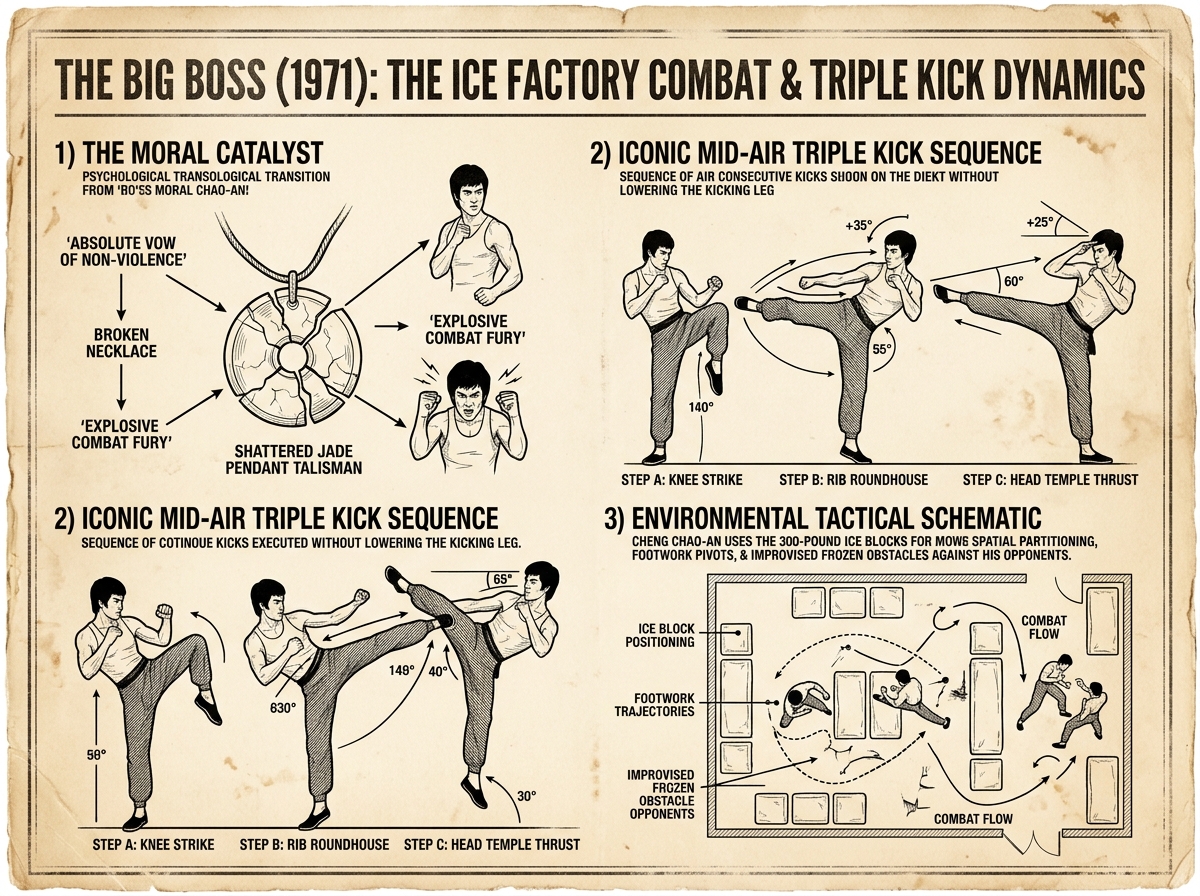
The original screenplay gave Lee’s character, Cheng Chao-an, a vow of non-violence that was supposed to create the dramatic tension: the skilled fighter who has promised not to fight, forced to break that promise when the situation demands it. This is a workable premise. Lee found it limiting. As production moved forward, he pushed the character further from the passive reluctant hero and toward someone with genuine menace and physical presence.
Director Lo Wei, who took over from Wu Chia-Hsiang partway through filming, gave Lee considerable latitude in the fight sequences. This was either because Lo Wei recognized that Lee knew what he was doing, or because he was pragmatic enough to let the production’s most obvious asset do what he did best. Probably both. The fight choreography in The Big Boss, while not as sophisticated as what Lee would develop in later films, shows a practitioner directing his own work rather than executing someone else’s vision of what martial arts should look like on screen.
The Thailand Production and Its Difficulties
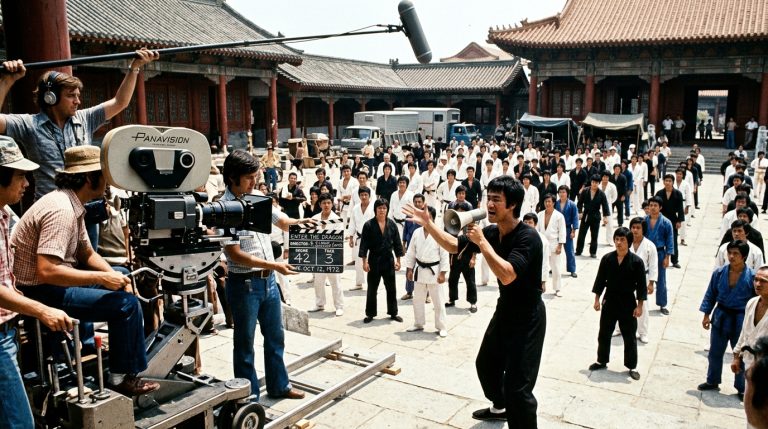
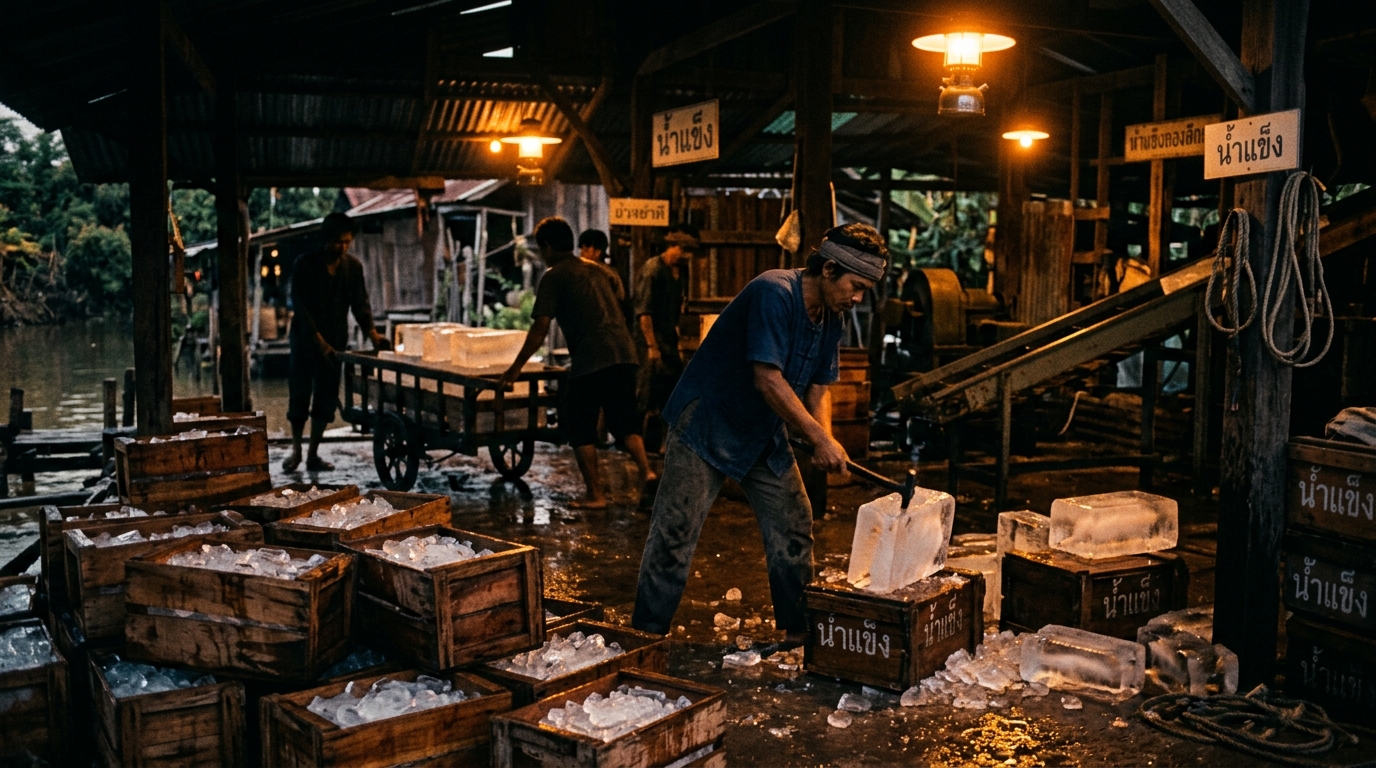
Pak Chong was a small industrial town a few hours from Bangkok, and the production shot primarily at an actual ice factory, the setting for the film’s central criminal enterprise. The conditions were brutal in ways that show in the finished film: the heat, the industrial environment, the limited crew. Golden Harvest was still establishing itself as a competitor to the dominant Shaw Brothers studio, and the budget reflected the company’s limited resources at that point in its history.
Lee’s living situation during the Thailand shoot was basic. He stayed in local accommodations and maintained his training schedule throughout, which was unusual enough for a leading man that crew members noticed and mentioned it in subsequent interviews. The discipline that would define his peak years in Hong Kong was already in place: he wasn’t treating the production as a vacation from training.
There were script problems throughout. Several actors in supporting roles were changed. The tone of the film shifted during production as the story became darker and more violent than the original concept had indicated. The version that reached Hong Kong audiences was substantially different from what was scripted when Lee arrived in Thailand.
Before The Big Boss, martial arts in Hong Kong films were dancing. Bruce made it dangerous, urgent, and visceral.
Raymond Chow, Co-founder of Golden Harvest
The Fight Sequences: What Was New
Hong Kong action cinema in 1971 was still operating largely in the tradition of Peking Opera-influenced choreography: elaborate, theatrical, clearly influenced by acrobatics and stage combat. The timing was slow by contemporary standards, the contact often clearly avoided, the style chosen for visual impressiveness over physical realism.
Lee’s fighting in The Big Boss landed differently. The speed at which he moved was genuinely faster than audiences had seen from a leading man in this genre. The filming speed adjustments that would become standard practice (shooting at higher frame rates to make Lee’s real speed visible on screen) were first worked out during this production. At standard 24fps, Lee’s fastest techniques became motion blur rather than visible movement. The solution was practical, if inelegant, and it reappeared on every subsequent production.
The ice pick sequence toward the film’s climax, where Lee’s character kills the main villain, shocked audiences partly because of its brutality. Lee had argued for the sequence to have real consequences: the villain dies badly, not cleanly. For 1971 Hong Kong cinema, this was a departure. The production’s willingness to let Lee make that argument and film it as he wanted it is one of the reasons the film doesn’t feel like a conventional product of its moment.
| Production Dimension | Historical Metric / Detail | Cultural & Industry Significance |
|---|---|---|
| Filming Location | Pak Chong, rural Thailand (extreme heat & primitive conditions) | Gave the film an authentic, gritty rural atmosphere distinct from studio sets. |
| Production Budget | Approximately $100,000 USD (HK$400,000) | Modest independent budget financed under Raymond Chow’s nascent Golden Harvest. |
| Hong Kong Box Office | HK$3.2 Million (shattered all previous records in 3 weeks) | Surpassed The Sound of Music; created instant superstar hysteria across Asia. |
| Fight Choreography | Replaced operatic stage fencing with realistic impact & bone-snapping speed | Established the modern Hong Kong martial arts action aesthetic. |
The Box Office Impact and What It Meant
The Hong Kong box office record that The Big Boss broke had stood since 1967. It shattered it within weeks. The scale of the response wasn’t something Golden Harvest had predicted: the company rushed The Big Boss into production to meet a release window, not because they were confident it would perform at this level. The production history doesn’t suggest a calculated star-making vehicle. It looks more like a pragmatic B-picture that found something in its lead actor that nobody had fully anticipated.
For Lee personally, the box office numbers changed the negotiating dynamic immediately. Golden Harvest gave him greater creative control on Fist of Fury, which went into production almost immediately after The Big Boss‘s Hong Kong run made clear what they had. The vow-of-nonviolence structure that he’d chafed against in The Big Boss didn’t appear again. The next film let him be angry from the first frame.
In the West, The Big Boss was released as Fists of Fury in 1973, following the American success of Enter the Dragon. By that point Lee was dead, and the film was essentially being sold retrospectively to an audience that had discovered him through his final movie. Seeing it in that sequence, after Enter the Dragon, makes the progression visible: the rougher production values, the slightly less assured fight choreography, the premise that constrains what Lee can do for most of the running time. As a breakthrough film, it’s more coherent when viewed first.
The Film’s Reputation Over Time
Critical assessments of The Big Boss have varied considerably depending on where the critic places it in Lee’s filmography. Viewed on its own terms, as a 1971 Hong Kong action film, it’s exceptional: faster than anything else in the genre at that moment, with a lead performance that carries real physical authority. Viewed as a Bruce Lee film in the context of Fist of Fury and Enter the Dragon, it reads as rough and constrained.
The production’s chaos shows in the editing. Scenes don’t always connect cleanly. The transition between the first and second halves of the film, when the story shifts from everyday drama to action sequences, is abrupt. Director Lo Wei was not a great filmmaker, and it shows. What saves the film is Lee’s presence in the action sequences and the genuine energy of someone who has been waiting a long time to demonstrate what he can do on screen.
The film is important in a way that goes beyond its individual qualities. Without the box office performance of The Big Boss, Lee doesn’t get the creative control that produced The Way of the Dragon (the only film he fully directed) or the conditions that allowed Enter the Dragon to be the film it became. The rough edges of the debut are what made everything else possible.
Watching It Now
The version most widely available is the Cantonese-language cut with subtitles, which is the closest to Lee’s original performance since he dubbed all his films in Cantonese. The Mandarin and English dubbed versions alter the rhythm of the dialogue scenes in ways that compound the production’s existing rough edges.
What you’re watching when you watch The Big Boss is the beginning of something. Lee at 30, in his first substantial leading role in a Chinese-language production, with constraints that frustrated him and a budget that limited the production’s ambition, still managing to show enough that the audience knew immediately they were watching someone specific. The box office reaction wasn’t confused. They saw it too.