Bruce Lee’s Running and Cardio Routine: The Foundation Most People Forget
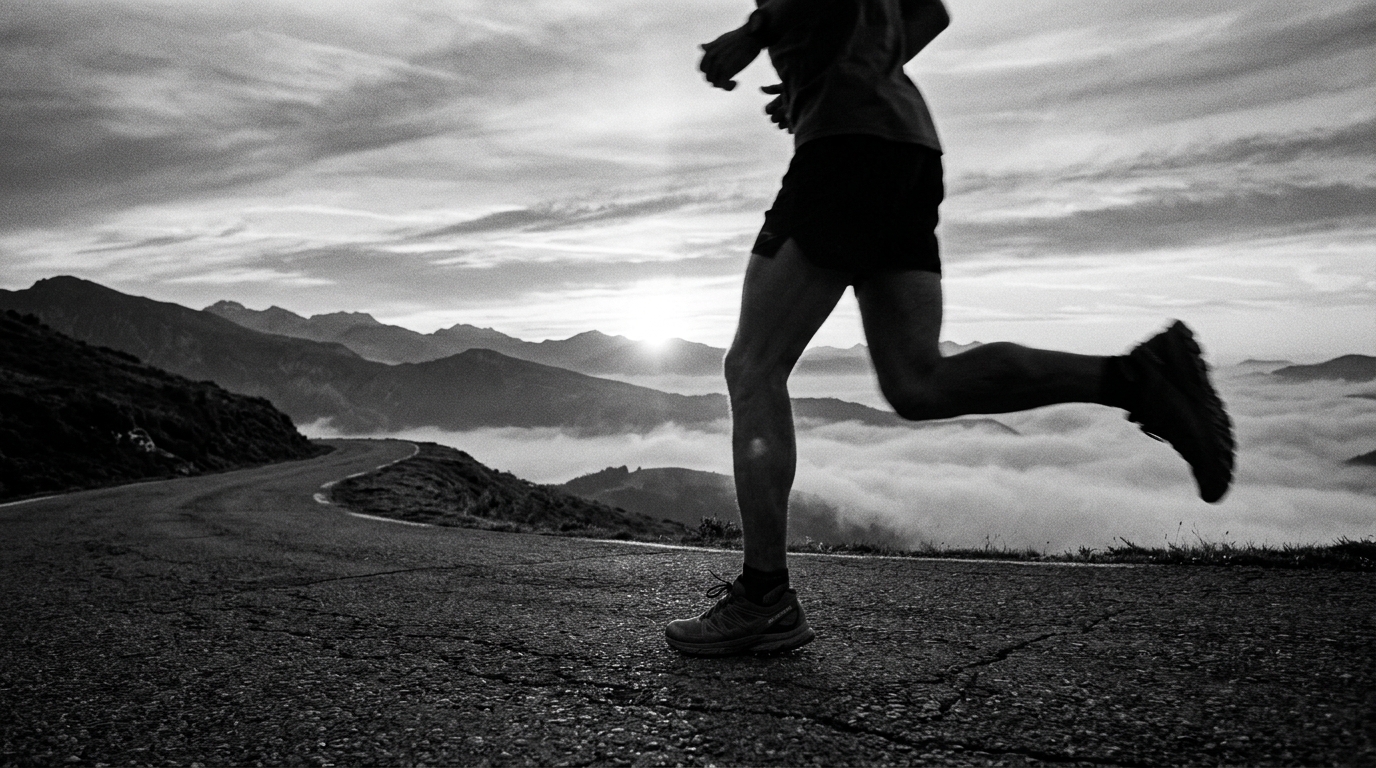
Every morning at 6 a.m., before his students arrived, before the phone started ringing, Bruce Lee ran. The route varied depending on which city he was living in, but the habit didn’t. In Seattle it was the hills above the university district. In Oakland it was the neighborhood streets before the traffic came. In Los Angeles, Bel Air roads before dawn. His wife Linda has described waking to find him already gone, back by the time breakfast was ready, the run completed before most people had opened their eyes.
The running is often treated as a footnote in discussions of his training, yet it was the foundational cardiovascular engine of his daily workout routine. The emphasis goes to the punching, the kicking, the weight work. This undersells what the cardio base did for everything else. A martial artist who can operate at full power in the fifth minute of a fight is a fundamentally different weapon than one who can only sustain it for sixty seconds. Lee understood this, and he trained for it deliberately.
How Far and How Fast
Lee’s standard morning run covered three to five miles, depending on the day and his training schedule. The pace wasn’t casual. People who ran with him consistently describe something between a recreational jog and a genuine training pace: fast enough to make conversation difficult, sustained enough to produce real cardiovascular stress over the full distance.
He wore relatively thin-soled shoes by modern standards, running in Onitsuka Tigers (the Japanese brand that later became ASICS) and similar lightweight footwear. This wasn’t a minimalist philosophical position. Cushioned running shoes as they exist today didn’t exist in the 1960s and early 1970s. He ran in what was available, which happened to be lighter and less structured than what runners use now.
The distance he covered monthly would have placed him comfortably among dedicated recreational runners today. Running six days a week at an average of four miles per session produces roughly 96 miles per month. Across the decade-plus of his serious training career, the accumulated mileage was substantial. That kind of base doesn’t disappear between workouts. It compounds.
Why Running Specifically
Lee chose running over other cardio options available to him for several reasons that he articulated in his training notes. First, it required no equipment and no partner. He could do it anywhere, any time, without scheduling around other people or access to a gym. For someone who treated training as a daily non-negotiable rather than an optional activity, the logistical simplicity mattered.
Second, running builds the specific endurance base that translates most directly to sustained physical activity. Cycling builds it too, and Lee cycled regularly on a stationary bike, but cycling doesn’t develop the ground contact forces and eccentric leg loading that running does for explosive leg power. He ran for the qualities of running that cycling couldn’t replicate, and he cycled for recovery days when his legs needed a break from the impact.
Third, and this appears in his journals explicitly, he valued the mental state that sustained running produced. The descriptions in his notebooks of early morning runs read almost like meditation reports: a clearing of thoughts, a settling of priorities, a particular quality of alertness that stayed with him through the morning’s training. He was describing what sports psychologists now call “runner’s high” and the cognitive benefits of steady-state aerobic exercise, but he arrived at the observation through practice, not research.
The Stationary Bike Sessions
Lee owned a stationary bike at each of his homes and used it consistently, particularly on days when his schedule or weather made running impractical. These weren’t light sessions. He set the resistance high and maintained sustained effort for periods ranging from 20 to 45 minutes, depending on the day’s training load.
He tracked his cycling the same way he tracked everything: logged in notebooks, with attention to duration and perceived effort. The detail-orientation isn’t obsessive in isolation. It’s rational for someone who was simultaneously trying to optimize performance, manage recovery, and maintain enough freshness to do quality skill work later in the day. Without records, you can’t see patterns. Without patterns, you’re training by feeling, which is imprecise at best.
The bike also served as active recovery. After a heavy sparring session or a demanding weight workout, a 20-minute moderate-intensity cycle ride kept blood moving through the legs, facilitated metabolic clearing, and maintained the day’s training volume without adding significant stress. Athletes at elite levels today call this “zone 2 work.” Lee called it cycling. The function is the same.
Jump Rope: The Third Pillar
Jump rope appeared in Lee’s training from his time in Hong Kong and continued throughout his career in America. It’s a fundamentally different cardiovascular stimulus from running: shorter intervals, higher coordination demands, and a rhythm that maps well onto the timing and footwork demands of fighting.
Lee’s rope work wasn’t elementary. He practiced speed skipping at high cadence, alternating footwork patterns, and the double-under (where the rope passes under the feet twice per jump) that requires both speed and timing precision. These weren’t warm-up activities. They were technical skills practiced with the same attention he gave to kicking combinations or hand technique drills.
The cardiovascular demand of serious jump rope work is comparable to running at a fast pace. Three minutes of continuous speed skipping produces roughly the same metabolic cost as three minutes of running at around eight miles per hour. For a fighter training twice daily, rope work offered high-intensity cardio stimulus in a compact time window, with the added benefit of developing the foot coordination and rhythm that translated directly into fighting footwork.
How the Cardio Work Influenced His Fighting
Watch Lee’s sparring footage from the late 1960s and you’ll notice something that’s easy to overlook: he doesn’t slow down. As the exchanges extend, his technique stays clean, his movement stays sharp, and he doesn’t fall into the survival mode of heavier breathing and simplified mechanics that characterizes a fighter running on fumes. That sustained output is a product of the cardio base, not talent.
His Jeet Kune Do approach explicitly incorporated the physiological reality of sustained combat. JKD technique is designed to be economical: straight lines rather than curves, intercepting rather than blocking, movement that conserves energy rather than expending it. But economy of motion can only do so much against an opponent who forces you to work. The cardio base was the insurance policy behind the economy.
His students from this period describe a teacher who could conduct full-intensity training sessions for hours without visible fatigue. This isn’t hyperbole. It’s the outcome of building an aerobic base over years of consistent daily training, then maintaining it through the same consistent discipline that built it. There’s no shortcut version. Lee just put in the mornings.
The 6 a.m. runs are worth thinking about as a principle rather than a specific prescription. Lee didn’t run because running is special. He ran because daily aerobic work produces a physiological base that makes everything else better, and morning was the time he could guarantee it wouldn’t get squeezed out by the rest of life. The specific activity matters less than the discipline of doing it before the day’s other demands have a chance to crowd it out. That lesson transfers regardless of what you’re training for.