Bruce Lee’s Leg Training: The Overlooked Foundation of His Power
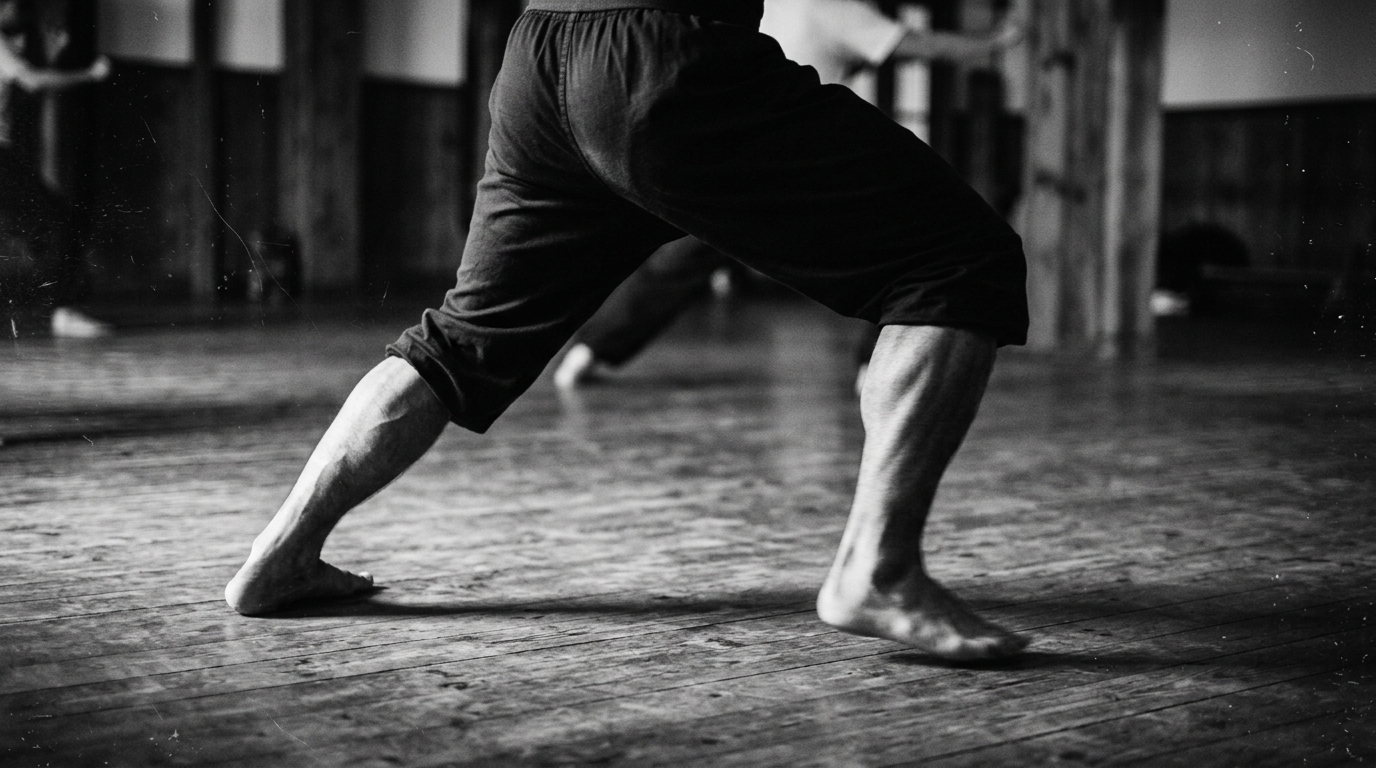
When martial artists talk about Bruce Lee’s training, the conversation almost always goes to his arms. The one-inch punch. The two-finger push-ups. The forearm he built swinging a sledgehammer in his garage. Nobody talks about his legs. That’s a mistake, because his kicks were arguably the more dangerous weapon, and the training behind them was more systematic than most people realize.
Dan Inosanto, who trained alongside Lee for years, described watching him practice a side kick hundreds of times in a single session against a heavy bag. Not hundreds of half-hearted reps. Hundreds of full-power kicks, each one snapping through with complete hip rotation. Lee kept a training journal, and those journals recorded his lower body work with the same obsessive detail he applied to everything else.
Why Lee Prioritized Leg Strength
Bruce Lee’s approach to the legs wasn’t about aesthetics. He was 5’7″ and competed in a world where his opponents were often larger. He understood early on that the legs generate roughly three times the force of the arms in a strike, and that reach is mostly determined by the lower body, not the hands.
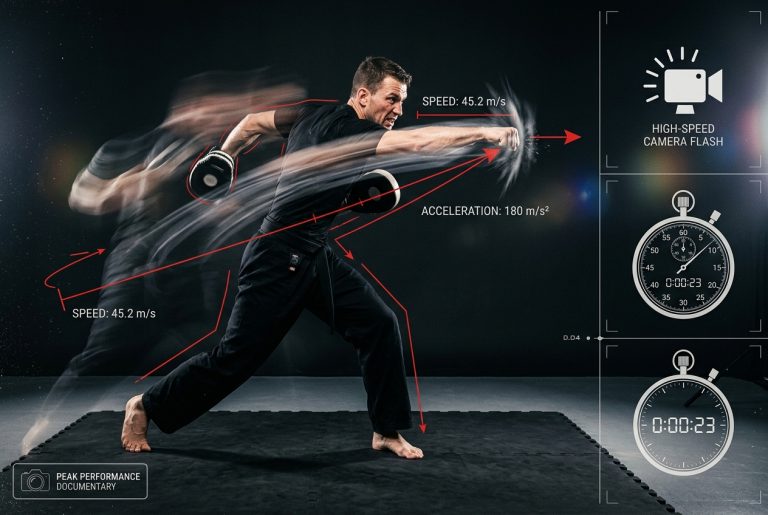
His Jeet Kune Do philosophy directly shaped his training priorities. JKD emphasized the lead-side as the primary weapon. That meant the lead leg had to be fast, strong, and capable of kicking from multiple angles without telegraphing the movement. Lee trained his lead leg kick obsessively, timing himself with a stopwatch to track improvement in speed.
He also ran. As detailed in our breakdown of his running and cardio routine, Lee ran every morning, typically three to five miles, and he wasn’t jogging. Friends who ran with him described a punishing pace. Running built the cardiovascular base and leg endurance that made his kicks sustainable in a long bout, not just flashy for the cameras.
Bruce Lee’s Leg Training Exercises
Lee’s training journals document several lower body exercises he returned to consistently. Squats appeared regularly, though not the heavy barbell squats popular in Western gyms at the time. He used a combination of bodyweight squats performed at high volume and weighted squats with moderate loads, focusing on full range of motion and explosive concentric drive.
Cycling was another pillar. Lee rode a stationary bike almost daily, which he viewed as low-impact conditioning that kept the legs fresh without the joint stress of running every day. He wasn’t casual about it. His notes reference cycling at high resistance for sustained periods, treating it as serious cardiovascular work, not recovery.
He also practiced something closer to modern plyometrics before the term existed in mainstream training culture. Jump squats, explosive step-ups, lateral bounds, and rapid direction-change drills all appeared in his routines. The goal was reactive power: the ability to generate force instantly from a dead position, which is exactly what a kick from a fighting stance requires.
The Kicking Drills That Built His Speed
Speed training for kicks followed a simple but demanding structure. Lee would practice kicking against resistance, then immediately practice the same kick without resistance, allowing the nervous system to experience the movement pattern at full, uninhibited speed. This contrast method is now understood to be one of the most effective ways to train explosive movement.
He worked every kick he used: the side kick, back kick, hook kick, and spin kick all appeared in his documented practice. He wasn’t indiscriminate about it. In his JKD framework, the side kick was the primary power strike from a distance, and it received the most deliberate attention. He practiced it from both the lead and rear position, at varying targets (knee, hip, midsection), and from different angles of approach.
The heavy bag took punishment during these sessions. Lee owned a custom-made bag that was weighted to match human resistance more closely than the standard canvas bags of the era. Photos from his Oakland and Los Angeles homes show the bags worn through at the striking zones. That kind of wear doesn’t come from casual training.
Flexibility as a Foundation, Not a Supplement
Lee’s flexibility work was extensive and done seriously (see our guide to his stretching and flexibility routine), not as a warm-up afterthought. He could perform a full side split with ease, and his hip flexibility allowed him to kick to head height with either leg from a natural fighting stance. Getting there required years of consistent stretching.
His stretching routine included partner-assisted leg raises, hip flexor stretches, hamstring work, and lateral hip openers. He trained flexibility at the end of workouts when muscles were warm, holding positions for duration rather than bouncing through them. He understood that a kick thrown from a tight, inflexible body is a slower, shorter, and less powerful kick.
There’s also evidence he used proprioceptive training, practicing kicks with his eyes closed to develop body awareness independent of visual feedback. It sounds unusual, but it develops the kind of precise control that makes kicks land accurately under pressure, when an opponent is moving and the environment is chaotic.
What the Films Actually Show
Watch Enter the Dragon with specific attention to Lee’s footwork (drawing heavily on his dynamic footwork mechanics) and you’ll see the product of this training. His weight transfers are instant. He doesn’t wind up. The kicks come from a completely neutral position, which means he’d removed the preparatory movement that normally signals a kick is coming. That’s not choreography. Choreography doesn’t produce that kind of mechanical efficiency.
In Game of Death, shot in 1972 before production halted, Lee demonstrating techniques against Kareem Abdul-Jabbar shows the practical application of his power training. Jabbar stood over a foot taller. Lee chose his angles specifically to neutralize that height, targeting the midsection with kicks that generated enough force to genuinely push a 7’2″ man backward. That’s functional leg power, not movie magic.
Training the Lee Way: The Core Principles
If you’re pulling lessons from Lee’s leg training for your own practice, a few principles stand out. Consistency matters more than intensity. Lee trained legs daily in some form, whether a full session or just cycling and stretching. The accumulated volume across weeks and months built the foundation.
He also combined strength and skill simultaneously, not in separate blocks. Strengthening the legs while drilling the actual kicking techniques meant the strength gains transferred directly to the skill. Isolated leg press sessions don’t automatically make your kicks faster or more accurate. Drilling kicks with added resistance, then without, does.
The flexibility component is non-negotiable. A stronger, tighter leg is not a better kicking weapon. Lee’s flexibility was a deliberate, trained quality that he maintained for his entire athletic career. Skip it and you cap your ceiling.
He kept records. The training journals weren’t optional for him. Writing down what you did, how many reps, how it felt, and what you’re testing next converts random exercise into an actual system. That’s what separated Lee’s development from the gym hobbyist approach, and it’s available to anyone willing to put pen to paper.
The legs were never the headline when people discussed Bruce Lee. He preferred it that way. A surprise weapon is more useful than an advertised one. But those who sparred with him knew exactly which part of his body they were most afraid of. It wasn’t the fists.